 BRICKBRICK
The Independent Journal of Plastic Architecture
Lead Story
Marcus Webb's 84,000-piece Neopolis sprawls across six 48×48 baseplates and documents a fictional city's entire urban history — from cobblestone medieval quarter to brutalist civic center.
In This Issue

Neopolis · Builder: Marcus Webb · 84,217 pieces · 4 years, 3 months
Community
Why rare tan 1×1 round plates now command $0.47 each — and what that tells us about the secondary market.
Technique
A deep look at Studs Not on Top technique and how master builders use it to achieve impossible surface textures.
Review
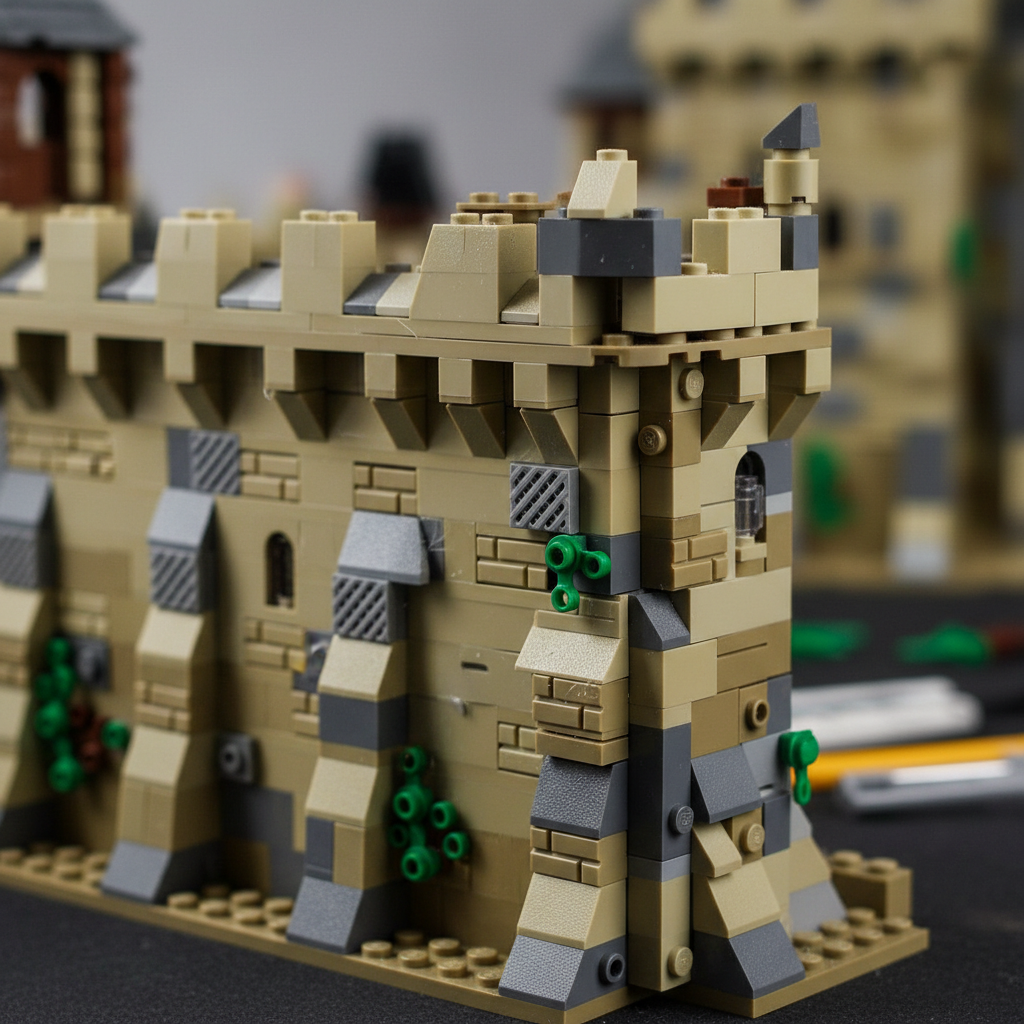
Detail: SNOT wall section · Builder: Priya Nair · 2,840 pieces in frame
The technique that builders use to hide the studs has quietly become the defining aesthetic of contemporary LEGO sculpture — and the tension between its constraints and possibilities is producing the most interesting work the hobby has ever seen.
There is a moment in every serious builder's progression when the stud — that small raised cylinder that defines the visual grammar of LEGO — stops being a feature and starts being a problem. It was Priya Nair, working late in her studio apartment in Bengaluru, who first articulated this to me in terms I found genuinely useful: "The stud is honest," she said, "but honesty is not always beautiful."
SNOT — Studs Not On Top — is the umbrella term for a family of techniques that rotate bricks away from their canonical orientation. A plate placed sideways. A bracket that bridges orientations. A clip-and-bar connection that lets surfaces face directions the original designers never intended. The results, when executed with the rigor Nair brings to her castle series, look less like children's toys and more like architectural maquettes submitted to a serious design competition.
The wall section photographed for this issue — 2,840 pieces spanning roughly 40×32 studs — contains not a single exposed stud facing upward. Every surface is either flush or deliberately textured through sideways placement. The mortar lines between the simulated stonework are achieved using dark-tan 1×1 round plates inserted horizontally into technic pin holes. The battlements use a clip-and-bar system that allows each merlon to rotate independently, giving the structure a subtle irregularity that reads as age and weathering.
"The stud is honest. But honesty is not always beautiful."
— Priya Nair, Builder
This is craft in the most traditional sense — the mastery of a medium through the accumulation of technique, the patience to solve problems that have no correct solution, only better and worse ones. The clutch power of a well-executed SNOT joint is, as Nair notes with some satisfaction, "structurally irrelevant and aesthetically essential." The bricks hold together just fine without the extra connection. But the extra connection is the whole point.

Priya Nair
Castle builder · Bengaluru, India · 340K pieces in collection

Shinjuku After Rain
Osaka, Japan

Orbital Station Vega
Stockholm, Sweden
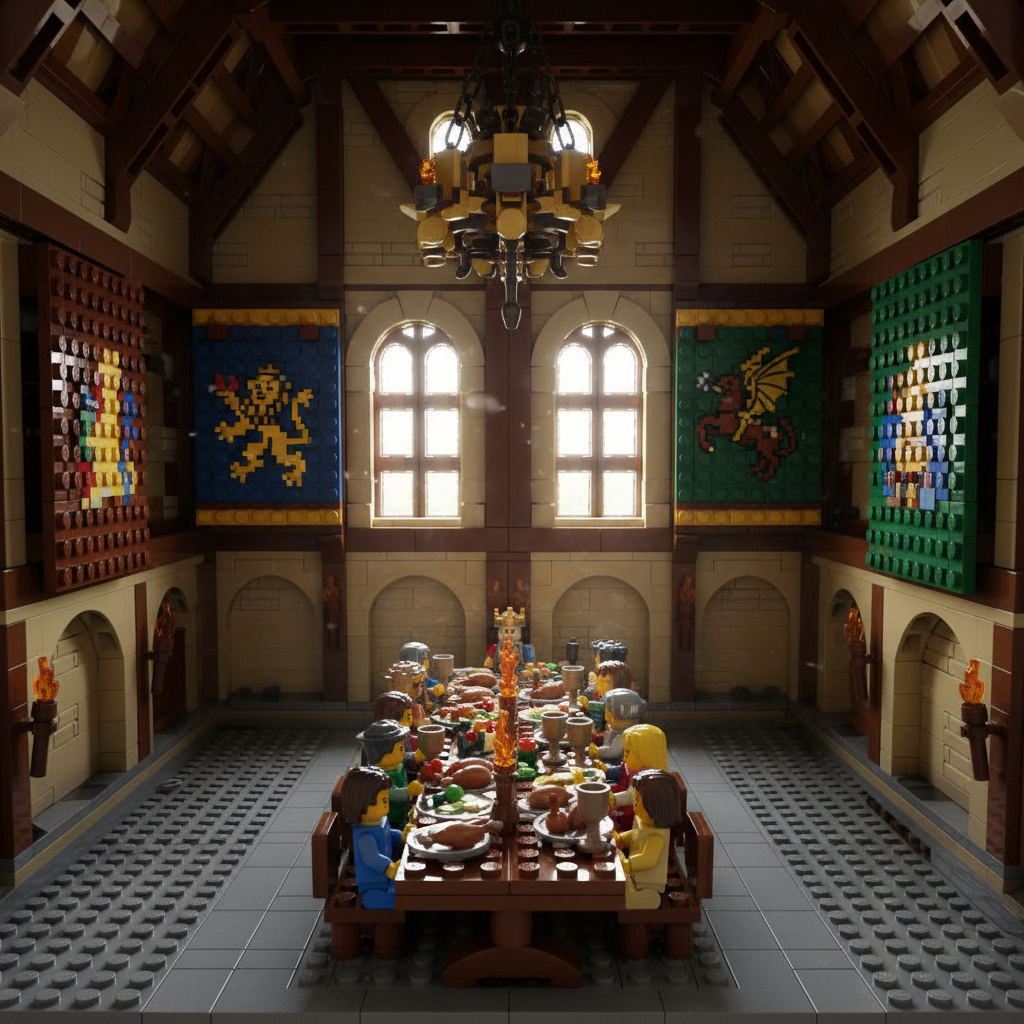
Great Hall of Thornwick
Dublin, Ireland

The Chrysanthemum Tower
São Paulo, Brazil
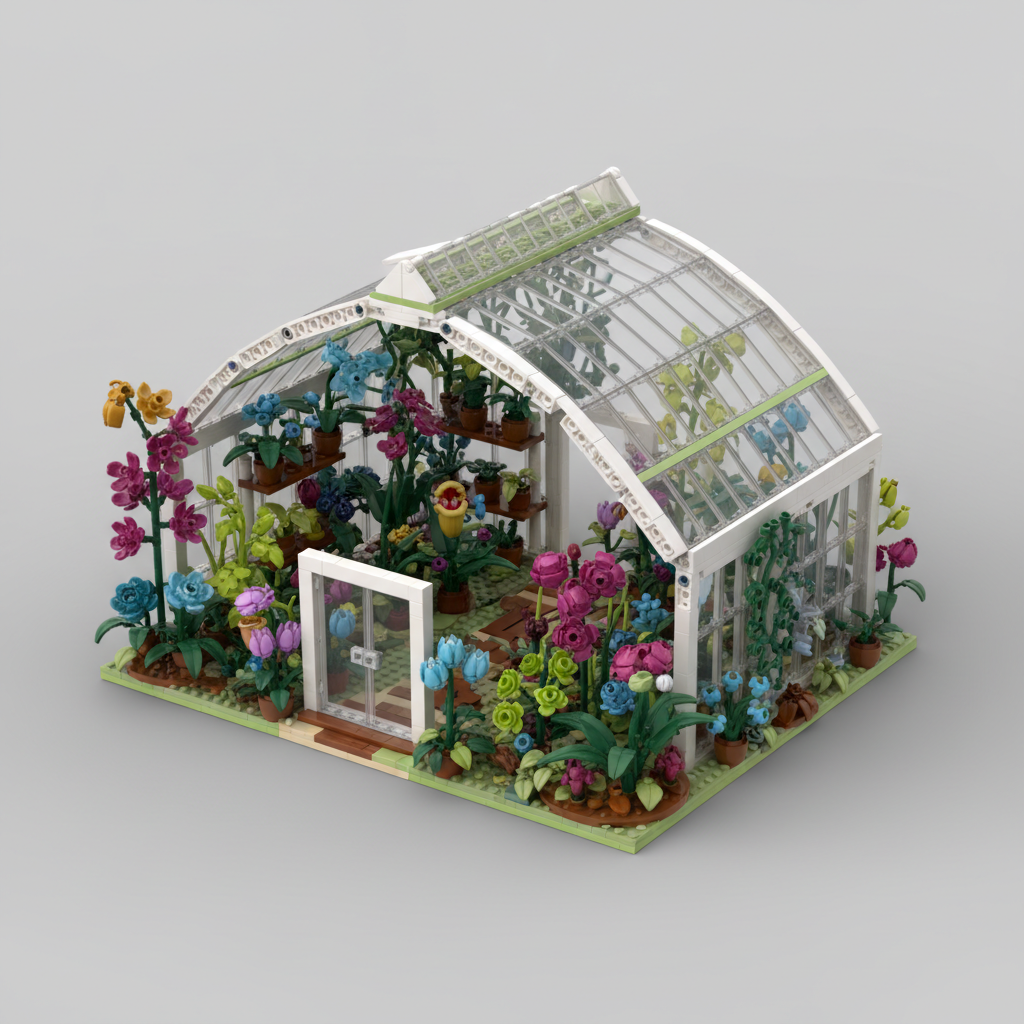
The Glass Garden
Accra, Ghana

Server Room 7-B
Pune, India

Nymphéas en Brique
Lyon, France

Harbour at Low Tide
Bergen, Norway
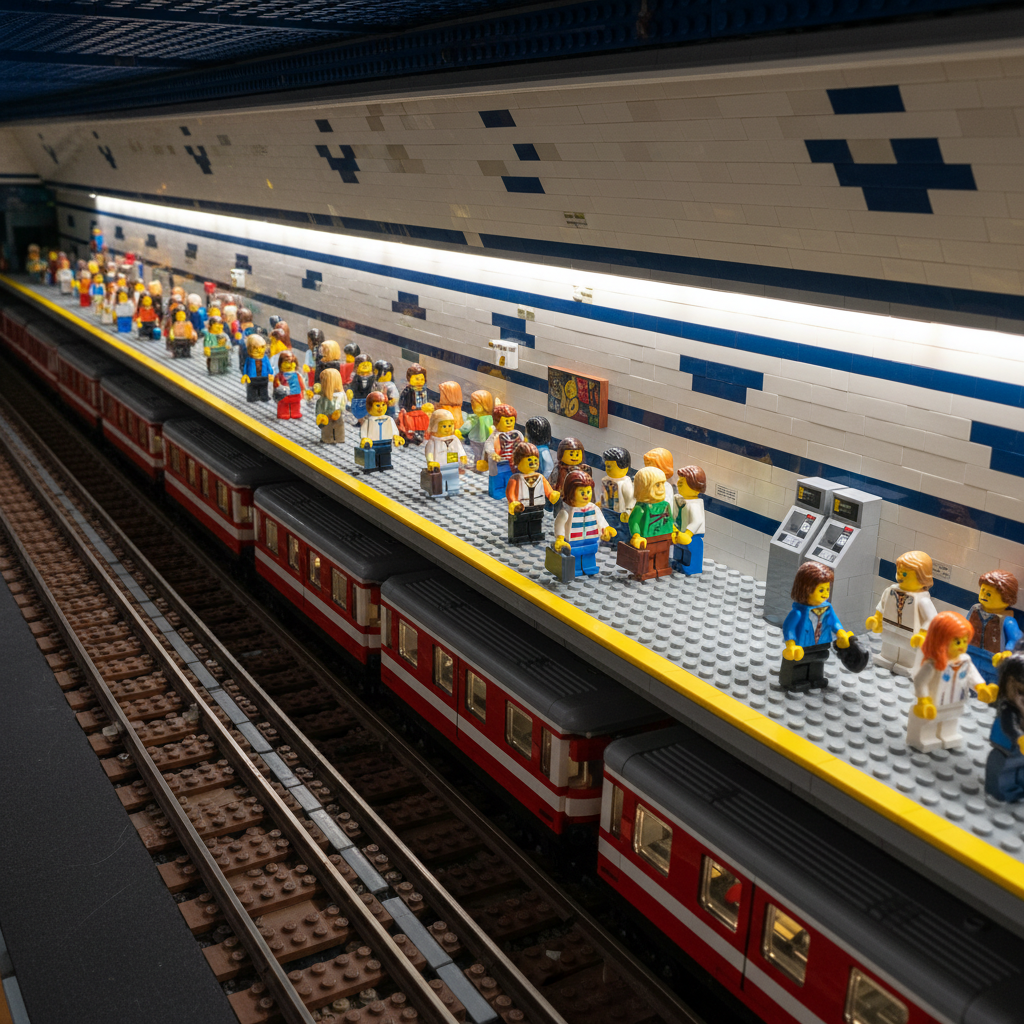
Platform 4 — Midnight
Tokyo, Japan
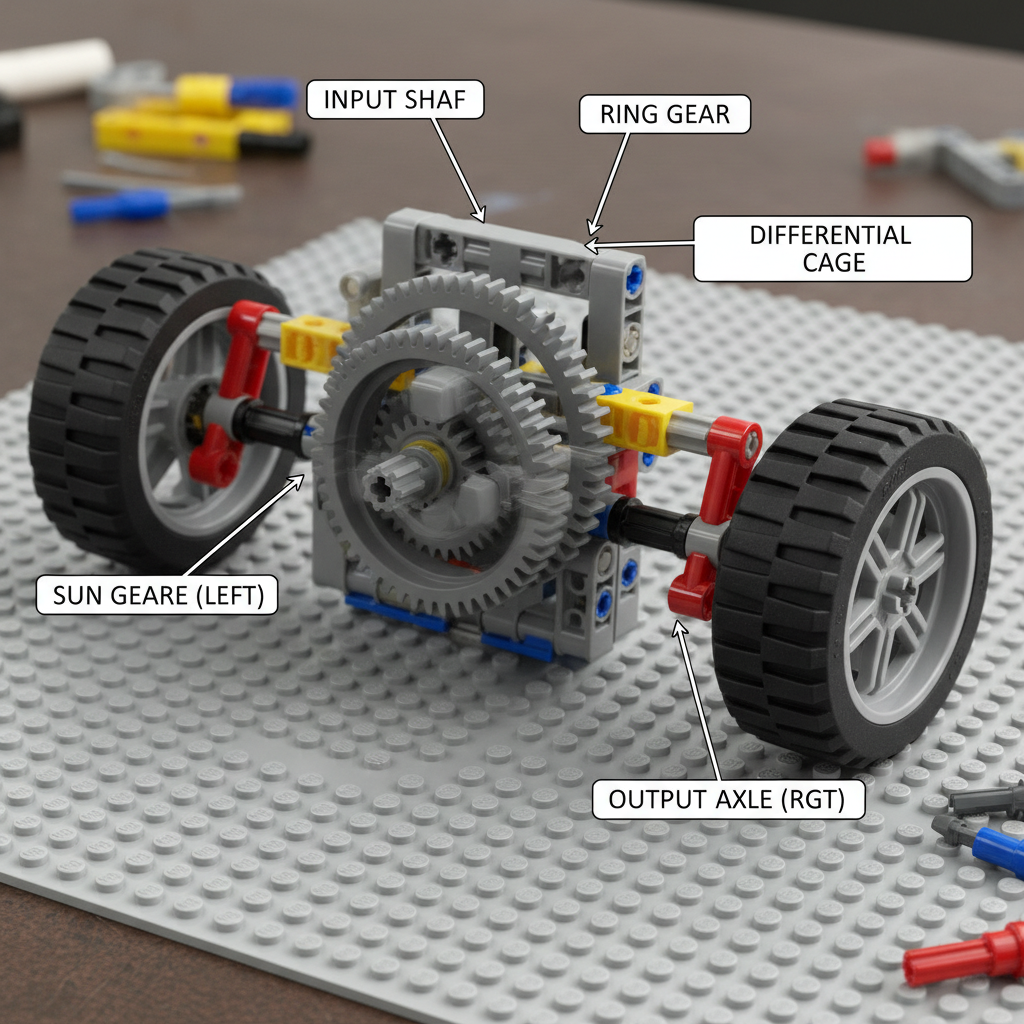
Open Differential Study
Moscow, Russia
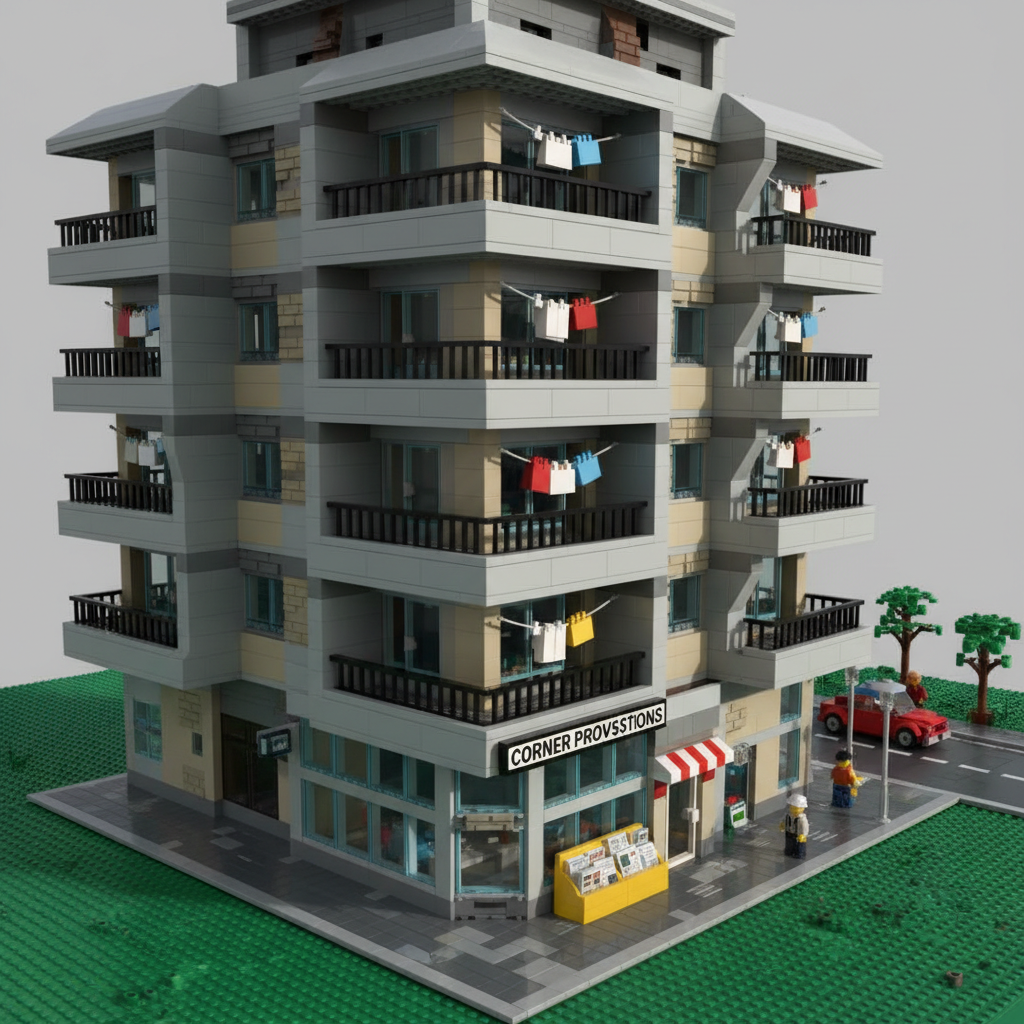
Bloc D, Est. 1974
Chicago, USA
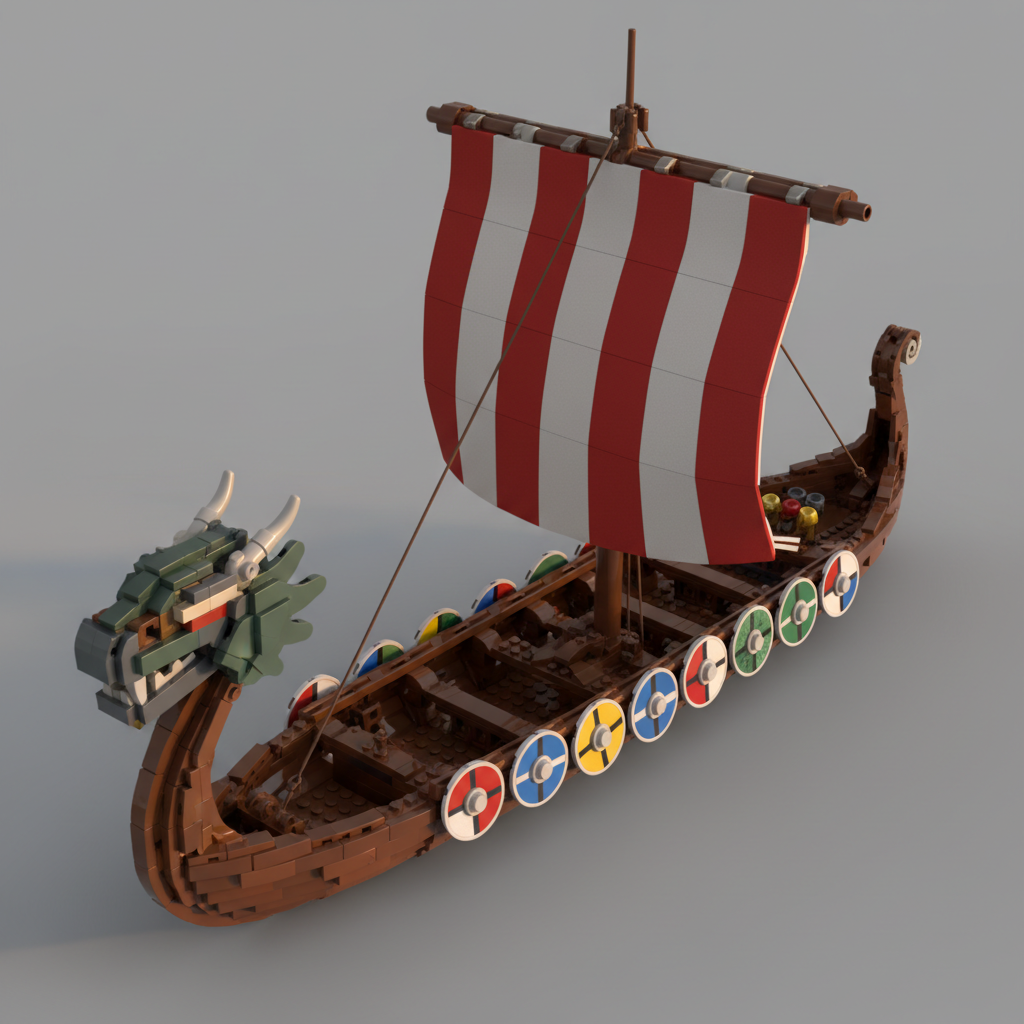
Draken — The Sea Serpent
Copenhagen, Denmark
Verdict
out of 10
Scores
1,212 unique part numbers across 14 color variants
Tan 1×1 round plates: now $0.47 on BrickLink
The arch pieces alone justify purchase at full retail
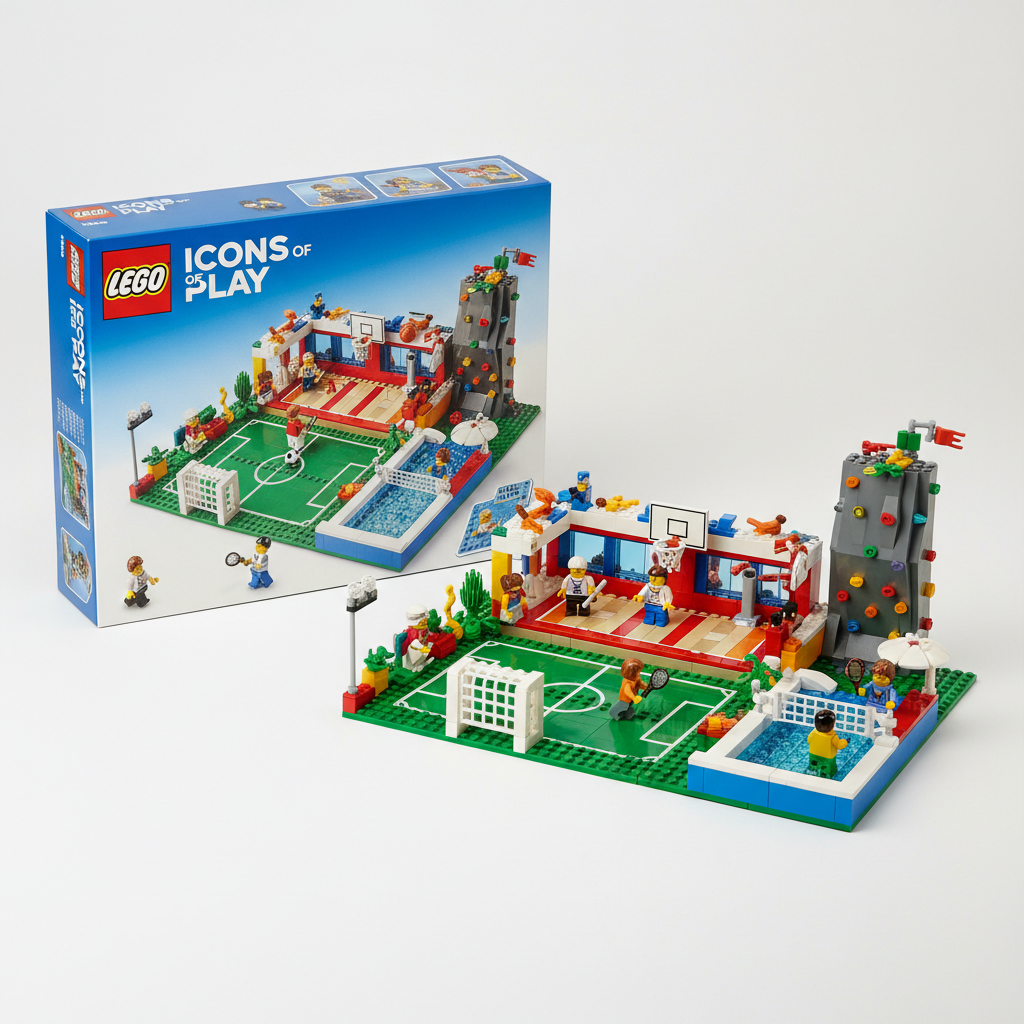
Icons of Play · Series 3 · Set 10327 · $279.99 · 2,352 pieces
There is a category of LEGO set that seems designed to make you argue with yourself, and the Icons of Play Series 3 lands squarely in it. The box promises a nostalgic recreation of classic playground equipment at architectural scale — a roundabout, a climbing frame, a sandpit the size of a dining table — but what it delivers is something stranger and more interesting: a meditation on the phenomenology of play rendered in 2,352 pieces across fourteen color variants.
The build experience divides cleanly into three phases. The first — the structural armature — is satisfying in the way that all good Technic-adjacent substructure is satisfying: you are making something that will bear weight, and the click of properly engaged axle connectors carries genuine authority. The second phase, the decorative surfacing, is where the set earns its price. Approximately 340 1×1 round plates in seven colors are deployed to create the soft-focus color gradients of the playground mural, and the technique — placing them in staggered rows with deliberate color bleeding — produces a mosaic effect that rewards sustained looking.
The third phase is where the set argues with itself. The minifigure complement — seven children in period-appropriate clothing from the 1970s — is the strongest in recent memory. The printing on the torsos is sharp enough to read as embroidery. But the decision to include a functioning swing mechanism in a set that is otherwise designed for display creates a structural tension that the design team has not quite resolved: the swing works, but the clutch power of the connection point means it will work approximately forty times before developing a perceptible wobble.
This is a small complaint about an excellent set. The parts per dollar ratio — at $0.119 per piece — is below the industry average for a licensed set of this complexity, and the part selection is generous enough that serious builders will find the purchase justified on BrickLink value alone before the model is halfway complete. Recommended without reservation, with a note that the swing mechanism should be treated as decorative from day one.
Reviewer

David Okafor
12 years reviewing · 890 sets
Chicago, USA
Quick Verdict
✓ Buy for parts
✓ Strong minifig set
✓ Display-worthy
— Swing wobble after use
— Below avg parts/dollar
Also Reviewed
Botanical Garden 10281
8.7Eiffel Tower 10307
9.3Titanic 10294
8.4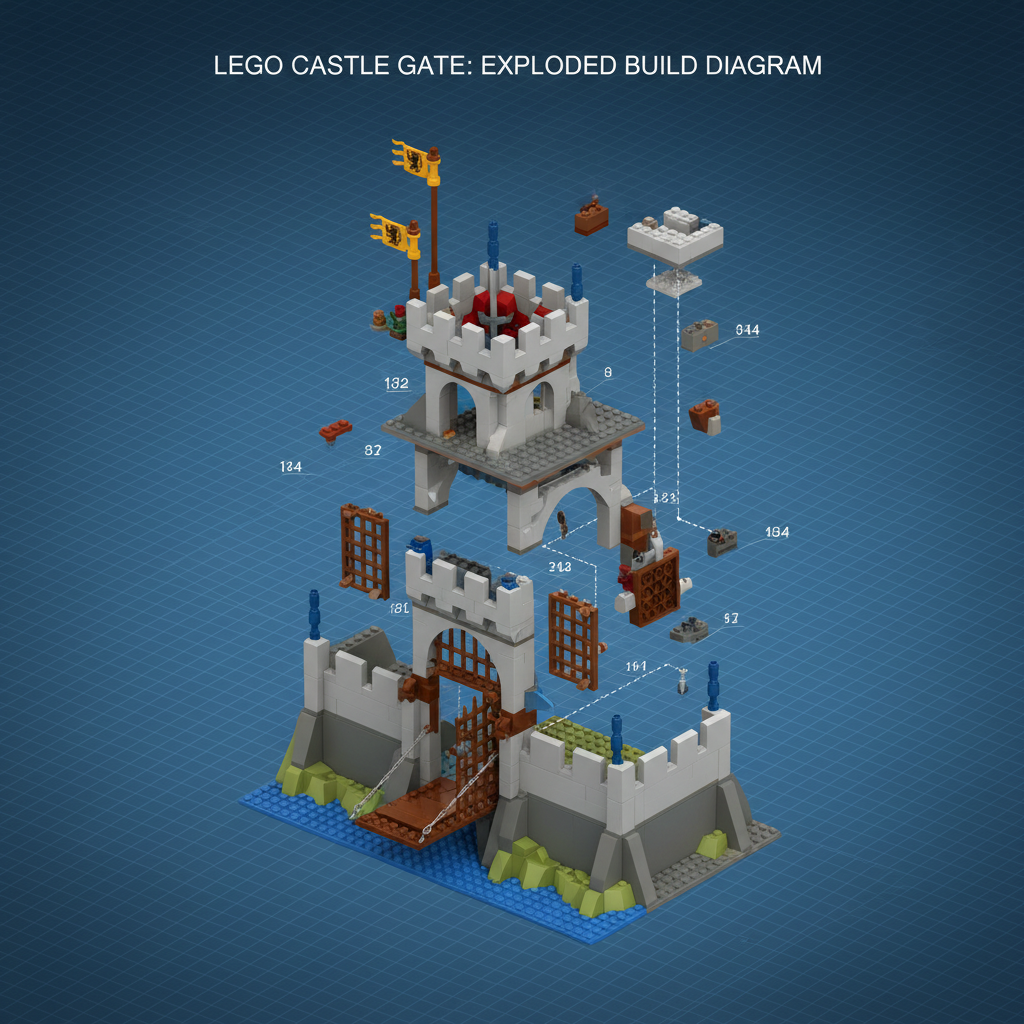
Neopolis Castle Gate — Exploded View
Section 7 of 12 · Gate Tower Base
1,026
Total Pieces
1,212
Unique Parts
14
Color Variants
186
Build Hours
2×4 Brick
×48
1×1 Round Plate
×340
Arch 1×5×4
×12
1×2 Grille Tile
×84
Plate 2×2 Round
×96
Clip Plate 1×1
×60
1×2 Jumper Plate
×72
Technic Pin 3L
×28
Slope 45° 2×2
×56
Brick Modified 1×2
×44
Plate 1×4
×120
Bar 1L with Clip
×16
Window 1×4×3
×8
Flag 2×2 Angled
×6
Minifig Torso
×4
Bracket 1×2–2×2
×32
Hover a part
to see detail
End of Issue XII · 3
Every fortnight: one essay, one gallery, one review, one catalog. No algorithm. No ads. Just bricks.
2,847 builders already in the print run